How Controversial Content Can Increase Traffic to your Website
Discover how leveraging controversial content can boost traffic to your website. Explore strategies for engaging your audience, driving discussion, and enhancing your online presence.

The data
In 2017, Neil Patel and BuzzSumo conducted research into the most viral articles from 2016.
They surveyed 11, 541 viral articles from 2016 and uncovered an interesting pattern in the top performing titles.
The best-performing articles of 2016 contained reference to a controversial topic:
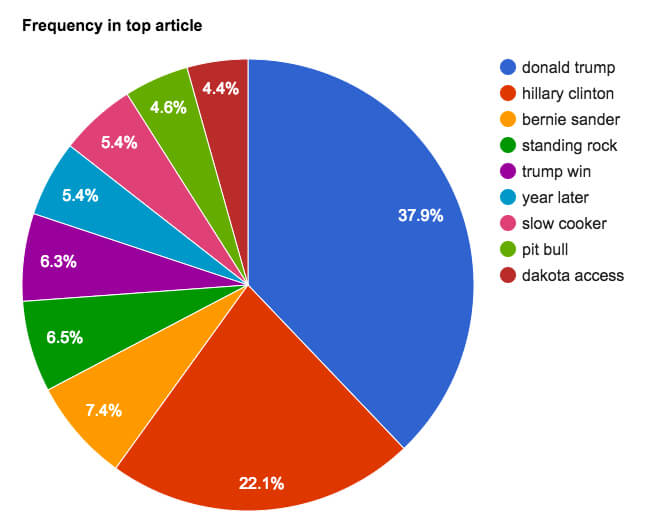 Credit: Neil Patel, “We analysed 11 541 viral articles from 2016 to uncover the secret formula”, 2017.
https://neilpatel.com/blog/how-to-give-your-content-wings-we-analyzed-11541-viral-articles-from-2016-to-uncover-the-secret-formula/
Of the 11, 541 articles surveyed, 37.9% of the most viral articles made at least one reference to Donald Trump.
Furthermore, of the most shared articles on social media in 2016, 47.1% contained a mention of Donald Trump.
Be controversial
Evidently, articles that contain controversial topics are more likely to be shared on social media.
The research shows that articles that contain a controversial topic in the title, can significantly increase the number of leads generated to your website.
An article that contains a controversial topic will spark curiosity and ignite interest in your audience, and whilst the topic is controversial, the article itself, does not necessarily have to be polarising.
Whilst controversy in marketing is nothing new, sometimes it is the best way for a business to attract attention.
The Dove “Is there a ‘Perfect Mum’?” campaign in 2017, is one example of how using a controversial topic can attract the right kind of attention for a business.
 Credit: DoveUK, “More Love from baby Dove – The Perfect Mum Campaign”, 2017.
https://www.dove.com/uk/baby/more-from-baby-dove/about-baby-dove/perfect-mum.html
The campaign used artificial intelligence to create the ‘perfect mum’, and despite initial controversy on social media, the campaign became a widespread success.
An advertising campaign that can trigger an emotional response amongst viewers, will also create widespread engagement on social media.
However, as in most aspects of life, balance is key in ensuring an engaging, yet the well-received response from viewers.
Whilst it is okay to take a strong position when writing about a controversial topic, it is necessary to discuss both sides of the topic to ensure that the article is not so controversial that it ticks people off unnecessarily.
In 2017, Pepsi produced an advertisement titled the “Live for Now Moments Anthem”.
https://www.youtube.com/watch?time_continue=1&v=uwvAgDCOdU4
Credit: Pepsi, “Live for Now”, 2017.
https://www.youtube.com/watch?time_continue=1&v=uwvAgDCOdU4
Pepsi’s short video was intended to inspire individuals to “unite” and to “join the conversation”, but rather sparked controversy for Pepsi’s lack of regard for the serious issues portrayed in the video.
The subsequent backlash that Pepsi received on social media following the release of this advertisement, is indicative of the fine line that exists between creating content that contains a controversial topic and creating content that is controversial.
Conclusion
Clearly, controversial topics garner people’s attention.
Commentary upon a controversial topic will ignite interest and often trigger an emotional response.
When creating controversial content however, it is important to remember that there is a fine line between creating controversial content that is well-received and content that evokes a negative response from audiences: not all publicity is good publicity.
Ultimately however, the use of a controversial topic in the title of an article will engage audiences and increase the number of leads generated to your website, as well as increasing the number of shares it will receive on social media.

Written by
Priya Mishra
CEO & Co-Founder
Priya Mishra is the CEO and Co-Founder of Corporality Media, the digital marketing, creative and technology execution arm of the Corporality ecosystem, serving established businesses across Sydney and Australia.
Related Content You Might Like
How to Separate Branded and Non-Branded Performance in Modern Search Reporting
Blended search reports hide your real performance. Here is how marketing teams can separate branded and non-branded search to measure demand capture and genuine growth.
Corporality Media
24 June 2024
How AI Can Accelerate Content Research Without Replacing Subject-Matter Expertise
Used well, AI speeds up content research while leaving genuine expertise firmly in charge. This guide shows marketing teams how to strike that balance.
Corporality Media Team
3 June 2024
How to Detect Hallucinations Before Publishing AI-Assisted Business Content
AI can produce confident falsehoods that read as fact. This guide helps marketing teams detect hallucinations before AI-assisted business content is published.
Corporality Media Team
20 May 2024
How Businesses Should Govern the Use of Generative AI in Marketing Content
Generative AI in marketing needs governance, not a free-for-all. This guide helps established businesses set sensible rules that protect quality, accuracy and brand.
Corporality Media Team
6 May 2024
Building a Content Approval Process for AI-Assisted Marketing Teams
AI-assisted content needs a robust approval process to protect quality and accuracy. This guide helps marketing managers build one that works without slowing teams down.
Corporality Media Team
29 April 2024
How Dedicated Campaign Pages Can Improve Marketing Performance
Much marketing effort is wasted at the last step, sending campaign traffic to a general page. Dedicated campaign pages capture that traffic and make campaigns measurable.
Corporality Media Team
29 June 2021