Why Offers Need More Than Discounts to Attract Customers
A discount changes your price. A good offer changes the reason someone says yes. Here is how to build offers that attract better customers without eroding your margins.
A discount can be an effective way to attract attention. It can create urgency, encourage someone to try a product and give an existing customer a reason to return.
But a discount on its own does not necessarily make an offer compelling.
Customers are not always looking for the cheapest option. They are often looking for the option that feels most useful, convenient, trustworthy or relevant to their needs.
This is why businesses need to think beyond percentage discounts when creating offers. A strong offer gives customers a clear reason to act while making the value of the purchase easy to understand.
A Discount Does Not Create Value by Itself
Reducing a price does not automatically make a product or service more valuable.
If customers do not need what you are offering, a 20 per cent discount may not change their decision. They may simply ignore the promotion.
Consider a professional service that normally costs $2,000. Offering it for $1,600 might attract attention, but customers still need to understand what they will gain from spending $1,600.
The real question is not simply:
“How much can I save?”
It is:
“What will I get in return for my investment?”
A strong offer answers that question clearly.
Customers Buy Outcomes
People generally care about what a product or service helps them achieve.
A business owner may not want a new website simply because it has modern design features. They may want a website that makes it easier for potential customers to understand their services and make an enquiry.
A homeowner may not want a discounted landscaping service simply because it costs less. They may want an outdoor space that looks better and requires less maintenance.
An offer becomes stronger when it connects the purchase to a meaningful outcome.
Instead of focusing only on price, explain what the customer can expect to gain.
Make the Offer Relevant to the Customer
A good offer starts with the customer's situation.
Ask yourself what your target customer is trying to solve, improve or achieve.
For example, a business experiencing a drop in website enquiries may be more interested in a website performance review than a generic discount on web design.
A busy professional may value convenience more than a small price reduction.
A new customer may want reassurance before making a purchase.
An existing customer may respond to an offer that gives them access to an additional service.
The more closely an offer matches the customer's needs, the stronger the reason to consider it.
Use Bundles to Increase Perceived Value
One way to create a stronger offer without relying entirely on discounts is to combine related products or services.
A bundle can make the purchasing decision easier while increasing the overall value of the offer.
For example, a marketing agency might package a website review, SEO audit and conversion assessment into one service.
A fitness business might combine an initial consultation with a personalised programme and follow-up session.
A retailer might combine complementary products that customers would normally purchase separately.
The important part is that the items should make sense together.
Adding unrelated extras simply to make an offer look bigger can create confusion rather than value.
Give Customers a Reason to Act Now
People often delay decisions even when they are interested.
A strong offer can provide a legitimate reason to take action now rather than later.
This could involve:
- A limited number of available bookings
- A fixed campaign period
- Early access
- A seasonal package
- A bonus available for a limited time
- A specific launch period
Urgency should be genuine.
Creating artificial deadlines every week can reduce trust and make customers less likely to believe future promotions.
Consider Adding a Useful Bonus
A bonus can sometimes be more persuasive than a discount.
Imagine two businesses offering similar services.
One offers 10 per cent off.
The other keeps the standard price but includes an additional service that customers genuinely find useful.
The second offer may create a stronger perception of value because the customer receives something extra without the business needing to reduce its core price.
Useful bonuses might include:
- An additional consultation
- Priority support
- A useful resource
- Extended access
- Additional service time
- Free delivery
- A complementary assessment
The bonus should be relevant to the original purchase.
Reduce the Risk of Trying Something New
Price is only one reason people hesitate to buy.
Sometimes the bigger concern is risk.
A potential customer may wonder whether the service will work for them, whether the provider can deliver what they promise or whether they will regret the decision.
An offer can address those concerns through reassurance.
This might include a clear guarantee, transparent process, free consultation, trial period or strong customer support.
For professional services, testimonials and case studies can also help reduce uncertainty.
When customers feel more confident about the decision, they may be less focused on finding the lowest price.
Use Proof to Strengthen the Offer
An offer becomes more credible when customers can see evidence that your business delivers what it promises.
Customer reviews, testimonials, case studies and examples of previous work can help.
For example, saying that your service can help businesses improve their online presence is one thing.
Showing how you helped a similar business solve a specific problem provides much stronger context.
Social proof can be particularly useful when customers are comparing several providers.
Want to know how your website really stacks up?
Run our free Website & AI Visibility Audit to see how you rank on Google — and in AI search results.
- Free, no-obligation report
- Delivered in minutes
- See exactly what to fix first
Make the Value Easy to Understand
Customers should not have to work hard to understand your offer.
A complicated promotion with multiple conditions can create hesitation.
Keep the core message simple.
Explain what the customer gets, who the offer is for, what they need to do and when the offer applies.
If there are important terms, make them clear.
Clarity builds confidence.
Personalise Offers Where Possible
Not every customer needs the same thing.
A new customer may respond to an introductory offer. An existing customer may be more interested in an upgrade or complementary service.
Businesses can also create offers for different customer segments.
For example, a local service provider might have one offer for first-time customers and another for customers who have used the business before.
Personalisation can make a promotion feel more relevant without requiring a large discount.
Do Not Train Customers to Wait for Discounts
Frequent discounting can create an unintended problem.
Customers may start waiting for the next promotion instead of purchasing at the normal price.
This can make it harder for a business to maintain healthy margins and can weaken the perceived value of its products or services.
Discounts should therefore have a clear purpose.
They might help introduce a new product, attract a specific customer segment or support a seasonal campaign.
They should not become the only reason customers choose your business.
Make the Call to Action Clear
Even a strong offer can underperform if customers do not know what to do next.
Use a clear call to action that matches the offer.
Depending on the business, this might be:
- Book a consultation
- Request a quote
- Claim the offer
- Shop the collection
- Make an appointment
- Get started
Avoid giving customers too many choices at once.
If the purpose of the promotion is to generate enquiries, make that next step obvious.
Make the Offer Fit Your Brand
Every promotion sends a message about your business.
A premium brand that constantly uses aggressive discounts may create confusion about its positioning.
A value-focused business may have more flexibility with price-led promotions.
Your offers should reinforce how you want customers to perceive your business.
If your brand is built around expertise, convenience, quality or personalised service, those qualities can become part of the offer.
This helps you compete on more than price.
Measure More Than Sales
Once an offer is launched, measure what happens.
Look beyond the number of people who used the promotion.
Consider:
- How many people saw the offer?
- How many responded?
- How many became customers?
- What was the average order value?
- How much did it cost to generate each customer?
- Did customers return later?
- Did the promotion attract the type of customers you want?
An offer that generates many low-value transactions may be less useful than one that attracts fewer customers with stronger long-term value.
Build Offers Around Value
The strongest offers do not always have the biggest discount.
They make the customer feel that taking action is worthwhile.
That value can come from convenience, expertise, speed, reassurance, additional services, useful bonuses, better access or a clear outcome.
Before creating your next promotion, ask:
- What problem does this offer solve?
- Who is most likely to value it?
- Why should they act now?
- What makes the offer different?
- What evidence supports the promise?
- Is the next step clear?
If you can answer these questions, you are already thinking beyond the discount.
The Best Offers Give Customers a Reason to Choose You
Discounts can attract attention, but they are only one part of a successful offer.
Customers want to understand what they are getting, why it matters and why they should trust the business providing it.
A well-designed offer combines relevance, value, clarity and a reason to act.
That approach can help businesses attract customers without constantly competing on price.
The goal is not simply to make something cheaper.
The goal is to make the decision to buy feel worthwhile.
Frequently Asked Questions
<p>Discounts can attract attention but do not automatically communicate value. Customers also want to understand what they will gain, whether the offer solves a real need and whether they can trust the business.</p>
<p>Businesses can offer useful bonuses, bundles, free consultations, priority support, additional services, guarantees or other benefits that add genuine value to the purchase.</p>
<p>Focus on the customer outcome. Make the offer relevant to their needs, add useful benefits, provide proof of value and give customers a clear reason to act.</p>
Related Content You Might Like
What Makes a Business Promotion Worth Investing In?
Not every promotion deserves your marketing budget. Learn how to assess business promotions based on audience fit, potential returns, timing and measurable results.
Corporality Media Team
22 July 2019
How to Choose the Right Marketing Budget for a Growing Business
A growing business does not need to spend more on marketing simply because competitors do. Learn how to set a practical marketing budget based on revenue, goals, customers and expected returns.
Corporality Media Team
15 July 2019
 Business Marketing
How Seasonal Demand Can Shape Your Marketing Calendar
Most businesses market hardest when they are already busy. Mapping your seasonal demand properly lets you spend earlier, smooth the peaks and make the quiet months pay.
Corporality Media Team
27 August 2019
 Business Marketing
The Importance of Timing in Promotional Campaigns
The same offer, the same audience and the same budget can produce very different results depending on when you run it. Timing is a strategy decision, not an afterthought.
Corporality Media Team
26 August 2019
How to Create a Marketing Campaign That Supports the Entire Customer Journey
Many campaigns support only one moment in the customer journey. This guide shows how to create a marketing campaign that supports the entire journey, from awareness to loyalty.
Corporality Media Team
21 December 2017
 Business Marketing
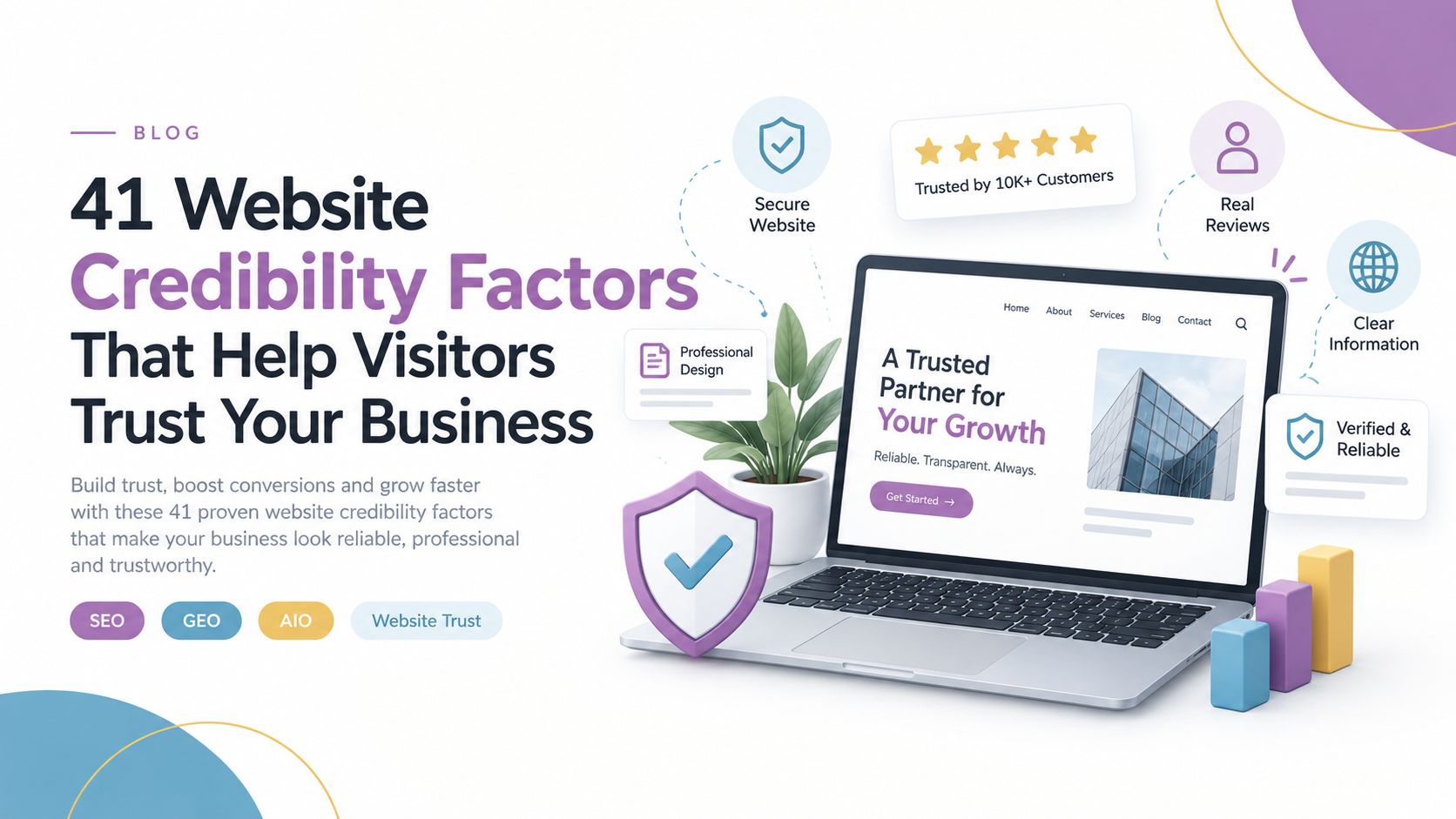
How to Make Your Business Website Look More Trustworthy and Credible
Your website may attract visitors, but trust is what helps turn them into customers. Discover 41 practical ways to make your website more credible, useful and easier to trust.
Corporality Media Team
29 September 2026