How to Create Better Presentation Materials for Sales Meetings
The right materials can make a sales meeting feel effortless; the wrong ones get in the way. Here is how to create presentation materials that support the conversation, hold attention and help you close.
Every experienced salesperson has lived through the meeting that went sideways because of the materials. The slides that were too crowded to read. The brochure that answered a question nobody asked. The proposal that looked like it had been thrown together in the car park. Good presentation materials are meant to make selling easier, yet all too often they do the opposite, distracting from the conversation instead of supporting it.
The good news is that great sales materials are not about flashy design or clever tricks. They come from a clear understanding of what a sales meeting is really for and a bit of discipline in the making. This article looks at how to create presentation materials that earn their place in the room and help you win the business.
Remember what the meeting is actually for
A sales meeting is a conversation, not a lecture. The buyer wants to feel heard, understood and confident that you can help. Materials that turn the meeting into a one-way slideshow work against that. The best sales materials support a genuine dialogue: they give you something to point to, clarify a tricky idea, or provide proof at the right moment, without hijacking the discussion.
Keep this front of mind and your materials change shape. Instead of cramming everything you might say onto slides, you build tools that help the buyer understand and decide. That starts with being crystal clear about your value, the same discipline behind a strong value proposition: say what matters most, simply, and let the detail follow.
Less on the page, more in the room
The single most common fault in sales materials is trying to say too much. A slide packed with text forces the buyer to choose between reading and listening, and they usually do neither well. Every element you add competes for attention with you, the person actually doing the selling.
Strip your materials back to what genuinely helps. One clear idea per slide. Headlines that make the point on their own. Images and simple visuals instead of dense paragraphs. The confidence to leave things off and say them out loud instead. Restraint here is not laziness; it is respect for the buyer's attention and a sign of a business that knows what matters.
Signs your materials are trying too hard
- Slides so full the buyer stops listening to read them
- Every feature listed, with no sense of what matters most
- Jargon and internal language the buyer does not share
- No room left for the conversation to breathe
Lead with the buyer, not with you
Weak sales materials open with a long history of your company. Strong ones open with the buyer's world, their problem, their goal, the outcome they want. This immediately signals that the meeting is about them, and it earns you the right to talk about yourself later, once you have shown you understand their situation.
Structure your materials to mirror the buyer's journey through the decision: here is your problem, here is what solving it looks like, here is how we do it, here is the proof it works. That order keeps the buyer engaged because every section speaks to something they care about.
Bring proof into the room
Claims are cheap; proof is persuasive. The most powerful sales materials include evidence that you have delivered before: a short customer story, a recognisable client, a concrete result. When a buyer can see that someone like them succeeded with you, the abstract promise becomes a credible expectation.
This is exactly why it pays to think carefully about how case studies strengthen your marketing. A well-chosen, relevant example dropped in at the right moment can do more to move a deal forward than any amount of feature-listing. Keep a small library of proof points ready so you can reach for the one that fits the buyer in front of you.
Want to know how your website really stacks up?
Run our free Website & AI Visibility Audit to see how you rank on Google — and in AI search results.
- Free, no-obligation report
- Delivered in minutes
- See exactly what to fix first
Make it look like a serious business
Design quality sends a message before a word is spoken. Materials that look polished and professional suggest a business that is careful and established; scrappy, inconsistent materials suggest the opposite, and that impression attaches to your offer whether it is fair or not. This is not about being fancy; it is about looking like someone worth trusting.
Where your materials include imagery, quality matters enormously, for the same reasons that make photography so important to a premium brand. A crisp, well-chosen image lifts the whole presentation, while a blurry stock photo drags it down. Sweat these details, because the buyer will notice them even if they never say so.
Keep everything consistent
Your slides, your leave-behind, your proposal and your follow-up email should all feel like they came from the same business. When they share a consistent look and voice, the buyer experiences a coherent, confident brand. When they clash, the buyer senses disorganisation, and doubt creeps in.
This is the principle that your marketing materials should work as a single system, applied to the sales meeting. Consistency is not about rigid uniformity; it is about the reassuring sense that everything you produce comes from one competent, joined-up organisation.
Prepare for the follow-up, not just the meeting
Deals are often won or lost after the meeting, when the buyer is reflecting or comparing you to others. Give them something worth keeping: a clear, well-designed leave-behind that restates the key points and proof, so your argument keeps working when you are not in the room. The same care you would put into materials for a busy trade stand, as explored in creating better marketing materials for trade shows, applies here, because in both cases your materials have to stand on their own once the conversation ends.
Conclusion
Better sales presentation materials are not about doing more; they are about doing less, more deliberately. Lead with the buyer, keep each page clear, bring proof into the room, look like a serious business, stay consistent, and leave something behind that keeps selling for you. Do that, and your materials stop getting in the way of the conversation and start quietly helping you win it.
Are your sales materials helping your team or holding them back? At Corporality Media, we design sales presentations and materials that support the pitch and win the room. Talk to the Corporality Media team today and give your next meeting the edge.
Frequently Asked Questions
<p>Effective sales materials support a conversation rather than replace it. They lead with the buyer's problem, keep each point clear, bring in proof such as a relevant customer story, and look professional and consistent. The goal is to help the buyer understand and decide, not to say everything at once.</p>
<p>As little as possible. Aim for one clear idea per slide with a headline that makes the point on its own. Crowded slides force the buyer to choose between reading and listening, so it is better to keep the page simple and say the detail out loud.</p>
<p>Deals are often decided after the meeting, when the buyer reflects or compares options. A clear, well-designed leave-behind restates your key points and proof so your argument keeps working when you are no longer in the room.</p>
Related Content You Might Like
 Business Marketing
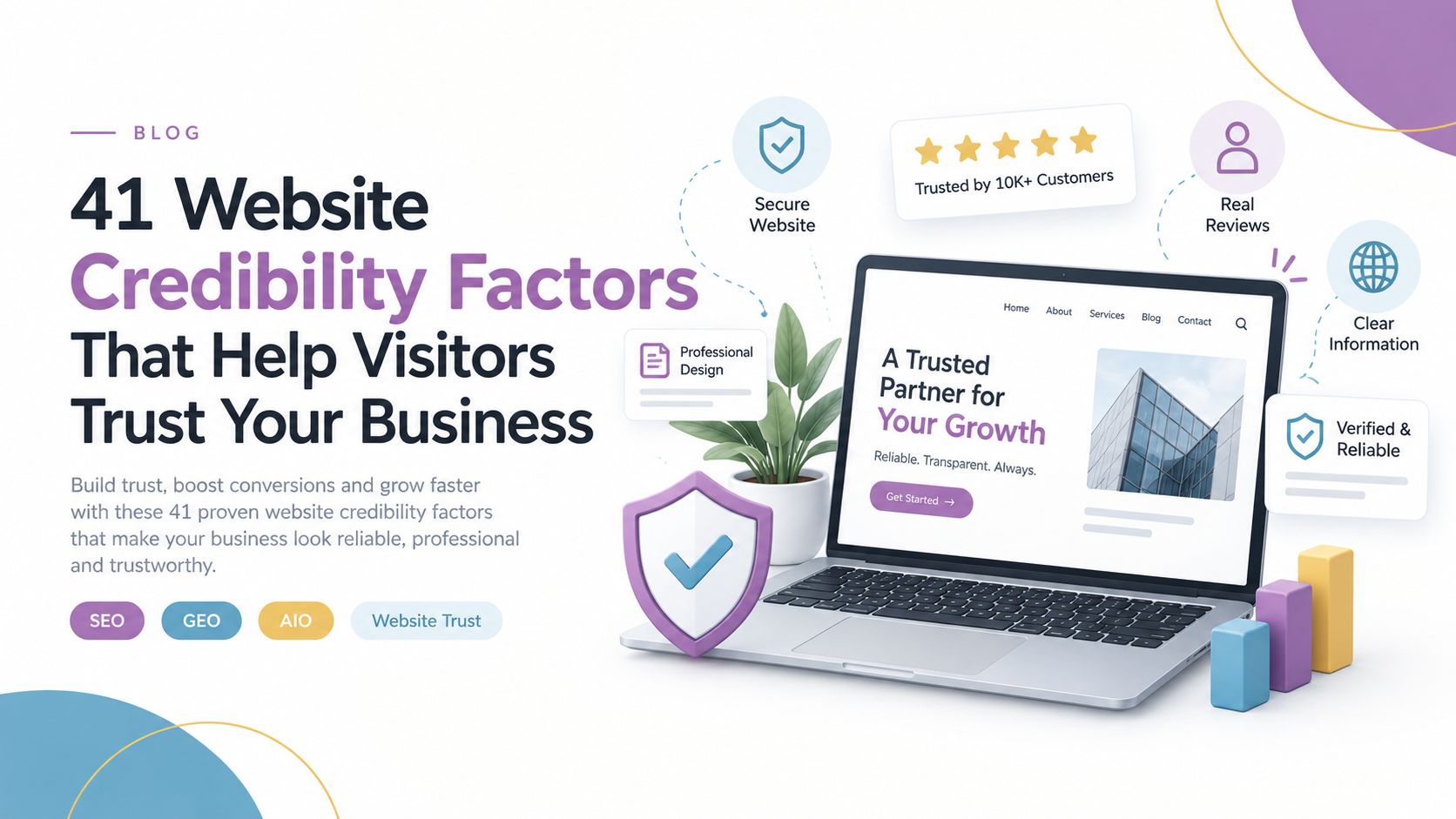
How to Make Your Business Website Look More Trustworthy and Credible
Your website may attract visitors, but trust is what helps turn them into customers. Discover 41 practical ways to make your website more credible, useful and easier to trust.
Corporality Media Team
29 September 2026
 Business Marketing
How Australian Businesses Can Optimise for AI Search and Generative Engine Optimisation (GEO)
A practical 2026 guide to improving AI search visibility, building digital authority and helping Australian businesses become easier for AI systems to understand and recommend.
Corporality Media Team
8 September 2026
 Business Marketing
How AI Search Is Changing the Way Australian Businesses Market Themselves in 2026
AI search is changing how Australian buyers discover, compare and choose businesses, making search visibility about more than traditional Google rankings.
Corporality Media Team
25 August 2026
The GA4 Reports That Matter Most to Manufacturing and Distribution Businesses
Most GA4 dashboards overwhelm manufacturers and distributors with vanity metrics. Here are the GA4 reports that actually reveal enquiry quality, buyer intent and commercial demand.
Corporality Media
17 June 2024
 Business Marketing
How to Select the Right Audience for a Promotional Campaign
Audience selection quietly determines most of your campaign result. Here is a practical way to choose the group most likely to respond, and to leave the rest alone.
Corporality Media Team
31 August 2019
 Business Marketing
How to Launch a New Product With a Strong Marketing Plan
Launches rarely fail because the product was wrong. They fail because the plan stopped at the announcement. Here is how to structure a launch that keeps working afterwards.
Corporality Media Team
29 August 2019